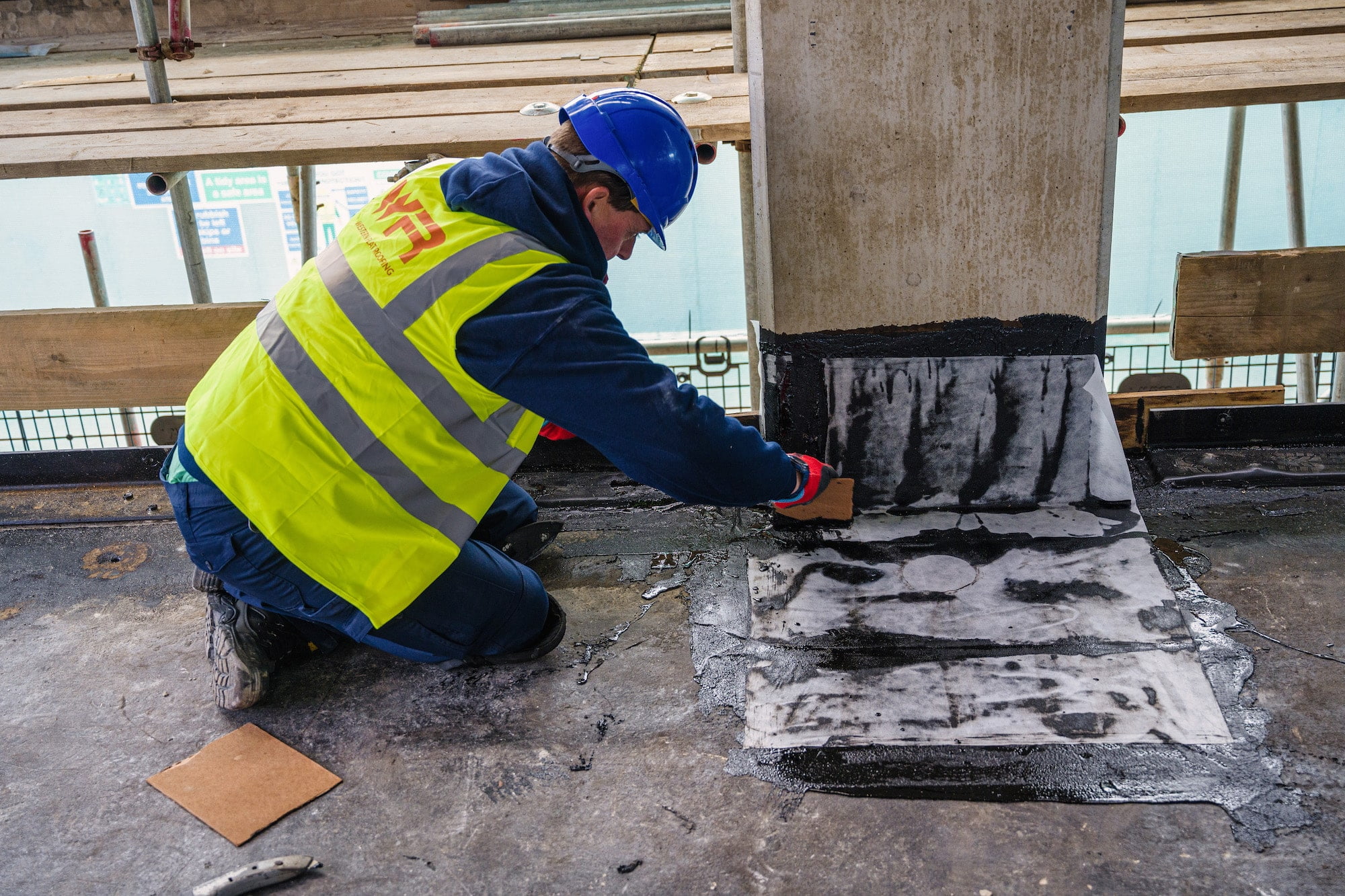
We understand that replacing a flat roof is a significant investment for homeowners, which is why many people wonder if it’s possible to install a flat roof without removing the old one.
The answer is that, yes, in some cases, roof overlaying is possible, but it depends on the condition of your flat roof and many other things.
In this blog, we’re going to explore what roof overlaying is, when it’s appropriate, the pros and cons, and the installation process.
What Is A Flat Roof Overlay?
A flat roof overlay is the process of installing a new flat roof on top of an old flat roof. Usually, it’s used for asphalt roofs, but it can sometimes be an option for other flat roofing materials, too (like EPDM rubber roofing and green roofs). It’s an option that saves money and time, but also comes with drawbacks.
When is Overlaying an Old Flat Roof an Option?
If you are looking to overlay a new roof over an existing flat roof surface, a flat roofing professional will have to come and inspect your current flat roof.
In the inspection, they will check the roof structure. It needs to be strong and not compromised, as the overlay adds an extra weight to be supported. There also needs to be no underlying issues with the roof underneath, like rot or mould.
Alongside the condition of your old roof, it also depends on building codes and regulations in your local area. Some may not permit it, and this will need to be verified before any work can commence.
When is Overlaying not an Option?
In many cases, overlaying is not a suitable option and can cause more problems, and removing the old flat roof is actually the more cost-effective option.
Sometimes, the existing roof will have underlying issues, like rot, water damage, and structural issues. If this is the case, the only option is to remove the old roof and replace it with a new one.
The general rule of thumb is to remove and replace the flat roof, as you can never tell 100% the condition underneath the roof.
If the property is not structurally sound, overlaying the flat roof area would just cause more issues.
If you’re looking for a long-lasting solution, overlaying is not for you. With a whole new roof replacement, you get a much longer lifespan.
Advantages of Overlaying
- Replacing a flat roof on top of an old roof structure is cheaper. This is because the old roof layers don’t need to be removed, so you don’t have the cost of demolition and removal.
- If you are not in a position to replace a whole flat roof, overlaying is a good temporary option. It can be done quickly and will not cost as much.
- Without the need to strip the roof, the installation process is quick.
The Common Problems of Overlaying a New Roof
- An overlay has a limited lifespan. Typically, this type of repair does not last as long. This is down to heat retention and moisture, and air bubbles between the roof layers, leading to faster deterioration.
- Putting a new roof covering on top of an existing roof increases the weight that the structure is holding. This strains the roof deck and framework.
- Sometimes, your previous flat roof will have more damage than meets the eye, so when you overlay, it just masks the problem, rather than fixing it.
- The junctions, trims, and perimeter details of a flat roof are particularly vulnerable when overlaying. If the roof edges aren’t sealed correctly, wind uplift, leaks, and moisture ingress can quickly compromise both the old and new roof layers.
How to Install a Flat Roof Over the Old One: The Process
If, alongside a professional flat roofing company, you have decided an overlay is appropriate, here’s the step-by-step guide to the process.
Initial inspection and survey
The first thing to do is to have a professional carefully check the existing flat roof’s condition to check for mold, leaks, sagging, water damage, or any other underlying issues.
Confirm building codes and regulations locally (for example, whether overlaying triggers additional insulation requirements or is prohibited) and whether your roof deck can support the extra weight of a new roof over the old one.
Preparation of the old roof surface
Once the company has decided your flat roof is structurally safe and overlaying is an option, the team will clean the flat roof, removing debris, vegetation, moss, and any other loose materials. They may also repair any blistered or bubbled sections so the surface is stable.
Any leaks or holes will be patched up and repaired, ensuring the penetrations and junctions are sealed correctly. If there are areas of rot or failed insulation, this will be stripped out and replaced.
If required by the overlay system, the roof surface will be primed so the new membrane or roofing material can adhere properly.
Installing the new roof system over the old flat roof
The team will select the right materials for an overlay system compatible with the existing roofing materials (for example, some liquid coatings can be applied over old asphalt, bitumen, single-ply membranes, EPDM rubber) and that meets fire, wind uplift, and compatibility standards.
They will lay any required separation layer or fleece to isolate the new roof membrane from the old roof to allow thermal movement and avoid inter-layer damage, and then the new roofing material will be applied. (whether that’s a built-up roofing system, EPDM rubber membrane, single-ply membrane, or liquid-applied waterproofing).
Final checks and finishing
After installation, an inspection of the finished roof will take place, ensuring no wrinkles, blisters, or trapped moisture; they will check for correct drainage and no ponding water.