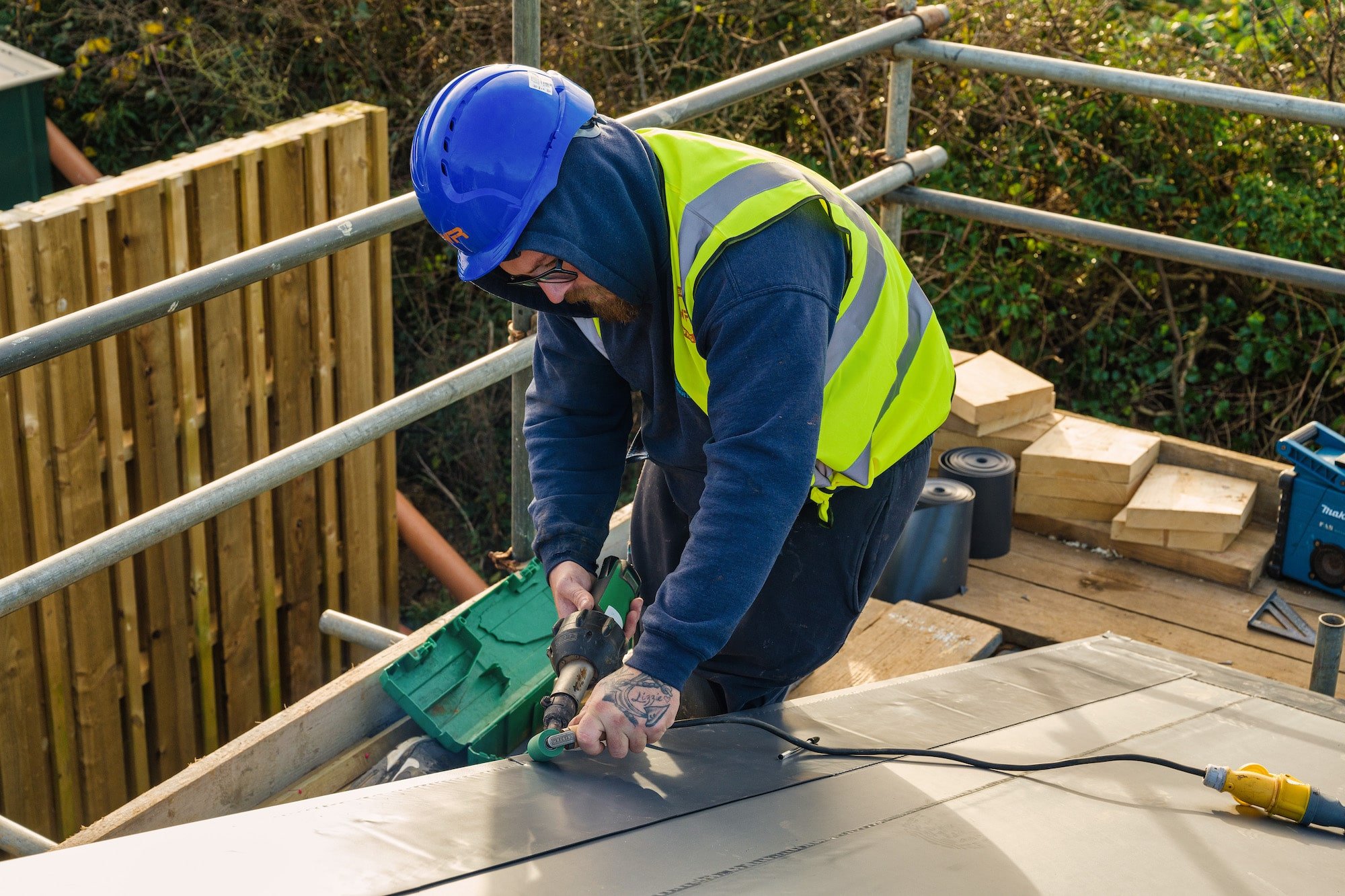
Building a single-storey extension is one of the most popular ways to add space and value to your property – and when it comes to roof design, flat roofs are the go-to system.
Before work begins, however, you should be well informed about more than just the aesthetics of your extension. Insulation, materials used, and the drainage system are all integral to maintaining long-term value to your extension.
This guide will tell you all the important details about flat roof extensions before committing to one blindly.
Why Choose A Flat Roof For Your Extension?
Flat roofs have become the standard for single-storey extensions. Whether it’s maximising height (due to building regulations) or the sleek lines which complement modern architecture, flat roofs will integrate well with your home.
They aren’t just good for aesthetics or height maximisation; flat roofs are also a much more cost-effective choice for an extension, giving you more budget for the building of your extension.
Flat Roof Extension Materials: Which Is Right for You?
Deciding you want a flat roof is the easy part. When it comes to materials, this is where you will find what will suit your needs and your budget.
GRP Fibreglass Extensions
GRP (Glass Reinforced Plastic) is one of the most popular choices for flat roof extensions on domestic properties – and with good reason.
GRP is a liquid-applied flat roofing material, which is reinforced with fibreglass. When set, it becomes a seamless, resilient surface which can last 25+ years.
For larger extension properties, this material may be less effective as the GRP responds poorly to thermal movement when spread across large surfaces. For a larger surface, a flexible material is far more suite.
Felt Extensions
Felt roofing is a good option if your budget is restrictive, and you need a fast and straightforward implementation
Compared to the rubber and liquid-applied counterparts, the felt roof falls short in terms of durability and lifespan. For the price and the installation time needed, Felt roofing is definitely worth adding to your extension.
Single Ply Extensions
Single ply roofing is a flexible and durable option for flat roof extensions, particularly where the roof covers a larger area. The membrane is designed to accommodate natural movement and temperature changes without cracking, while providing a watertight finish. It is also lightweight and quick to install, making it a strong long-term option for both domestic and commercial extensions.
Insulation & Building Regulations
Flat roof extensions must adhere to the UK government’s building regulations, including planning permission from the proper authorities.
In terms of insulation, your property must pass strict thermal insulation standards, which can be found in Approved Document L.
Getting your extension up to standard isn’t just a government requirement, but if you are going to be utilising the space, you want it to be livable and comfortable.
Planning Permission
Under Permitted Development, a single-storey rear extension generally doesn’t need planning permission if it doesn’t extend beyond 4 metres from the rear wall of a detached house, 3 metres for any other house or it does not exceed 4 metres in height.
We’d always recommend checking with a local planning authority to confirm whether or not planning permission is required for your property.
Drainage & Falls: Getting It Right
An important part of your extension is the Drainage system, as well as the gradient at which rainfall can hit a roof.
Building Regulations and British Standards recommend a minimum finished fall of 1:40, and because flat roofs can deflect slightly under load, the design fall is typically specified at 1:80.
In terms of drainage options, there are a few drainage systems depending on the size of your extension or flat roof. The most common is a standard gutter and fascia system, which is often the most cost-effective and straightforward to implement.
Outlets and downpipes are another option, which are more expensive than gutters and fascia systems. This system is a neat and effective solution suited to larger extensions, with internal drainage outlets fitted through the roof membrane, which connects to a downpipe.
To find out more about the right drainage system for your extension, get in touch with the expert team at Western Flat Roofing.
How Long Does a Flat Roof Extension Take?
This depends on the size of your extension, your drainage system as well as the weather conditions.
For smaller flat roof extensions, it can take 1-2 days to install a flat roofing system. For a larger flat roof extension, it could take between 4-7 days to complete a full system.
Find a local expert to book a free survey. From here, our expert team will be able to assess the size of your roof and give you an estimate for the number of days it will take to complete.
Get a Free Flat Roof Extension Survey
Looking for a new flat roof installation on your extension? Look no further than the experts at Western Flat Roofing.
Whether it’s a domestic or a commercial property, we will conduct a free extension survey on your property, giving you a detailed quote for the results you are looking for.
Get in touch with our team now.