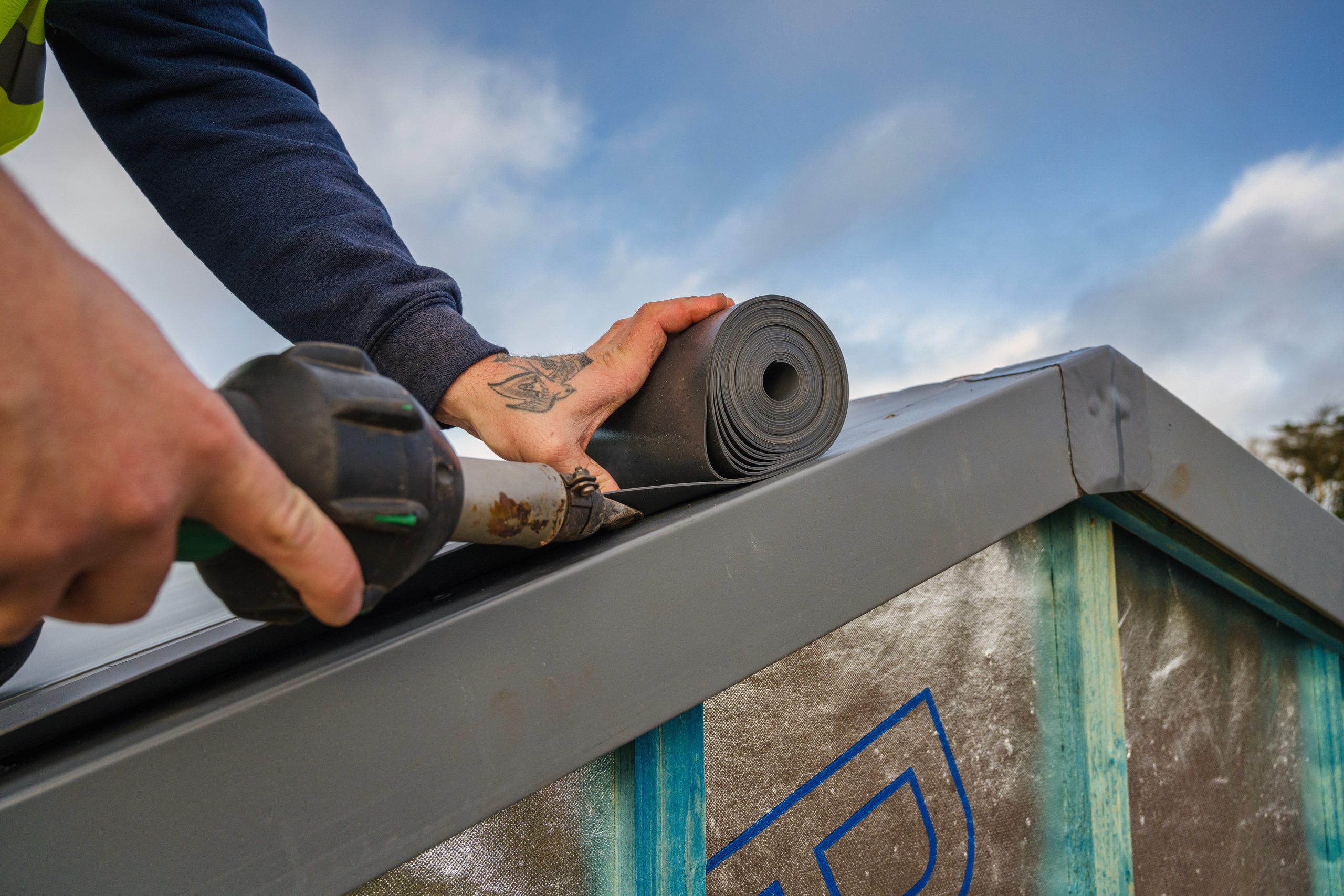
If hot melt roofing has been specified for a project you’re designing or managing, it helps to understand why this system has been chosen and what’s involved in the installation.
Hot melt is a proven waterproofing system used across a wide range of commercial roofing projects, particularly where durability, complex detailing, or a build-up such as a green roof or podium deck is required.
At Western Flat Roofing, we’ve been delivering flat roofing solutions for more than 60 years and work with a wide range of commercial roofing systems, including hot melt. Here, we explain how hot melt roofing works, its key benefits, and where it can be the right choice for your project.
What Is Hot Melt Roofing?
Hot melt roofing is a fully bonded waterproofing system made from modified bitumen, polymers, and rubber, reinforced with a high-tensile polyester fabric. The material is heated on site before being applied to the roof, creating a continuous waterproof membrane across the surface.
Unlike sheet-based roofing systems, hot melt forms a monolithic membrane, meaning water cannot track beneath or behind the waterproofing. Under the right conditions, the system can also self-seal minor cuts or penetrations.
How Is Hot Melt Roofing Installed?
Before installation begins, the roof deck needs to be clean, dry and correctly prepared.
The hot melt material is heated before being applied directly to the roof surface, with reinforcing fabric incorporated into the system as required by the specification.
Once applied, the system forms a fully bonded waterproof layer across the roof and around details such as upstands, rooflights and service penetrations.
Depending on the project, additional layers can then be installed above the waterproofing, making hot melt particularly well suited to inverted roofs, green roofs, terraces and other more complex roof build-ups.
What Are the Benefits of Hot Melt Roofing?
One of the main advantages of hot melt roofing is its ability to create a seamless, fully bonded waterproofing layer.
Key benefits include:
- Seamless waterproofing with fewer joints and laps than traditional sheet systems
- Fully bonded protection, helping prevent water from tracking beneath the membrane
- Durability for demanding commercial roofing applications
- Fast application when the roof and weather conditions are suitable
- Compatibility with other roof systems, including green roofs and inverted roof build-ups
- Long-term performance when correctly specified, installed and maintained
Hot melt systems can also be installed on clean, dry and frost-free surfaces at temperatures as low as -18°C, depending on the manufacturer and system being used.
When Is Hot Melt Roofing the Right Choice?
Hot melt can be a strong option for a range of commercial roofing projects, including:
- Podium decks and roof terraces
- Green roof systems
- Inverted roofs
- Roofs with multiple upstands or complex detailing
- Commercial buildings requiring durable, fully bonded waterproofing
- Projects where other elements will sit above the waterproofing layer
The right system will always depend on the building, roof construction and wider project requirements, which is why we assess each roof individually before recommending a solution.
Hot Melt Roofing for Complex Roof Designs
Hot melt can also be particularly effective where a roof contains lots of detailing.
Because the waterproofing is applied directly across the surface, it can be formed around awkward junctions without relying on multiple cut sections of sheet material.
For architects, contractors and project managers working with more complex roof designs, this can make hot melt a practical way of creating a continuous waterproofing layer beneath the wider roof build-up.
How Long Does a Hot Melt Roof Last?
Hot melt is designed as a long-term waterproofing solution. At Western Flat Roofing, we advise that with correct installation and protection, hot melt systems can typically achieve a lifespan of around 30 to 50 years, although the final lifespan will depend on factors including the system used, installation quality and ongoing maintenance.
Manufacturer warranties may also be available depending on the specification and system chosen.
How Much Does Hot Melt Roofing Cost?
The cost of hot melt roofing varies depending on the size of the roof, access, detailing and the overall build-up required. The final price will depend on the requirements of the individual project.
Rather than choosing a system based on initial cost alone, it’s important to consider its suitability, expected lifespan and the role the waterproofing needs to play within the overall roof design.
Why Choose Western Flat Roofing for Hot Melt Roofing?
Here at Western Flat Roofing, we’ve been delivering domestic and commercial flat roofing solutions since 1966. We are approved contractors for a number of leading roofing manufacturers, including Bauder, Sika, Garland, Alumasc and Kingspan, meaning our teams are trained to install systems to quality-assured standards.
Our approach is to look at the roof as a complete system, taking into account waterproofing, insulation, drainage and the conditions the roof will need to withstand rather than simply installing a product in isolation.
You can find out more about the systems we work with on our commercial systems and suppliers page or browse examples of our work in our commercial case studies.
If hot melt roofing has been specified for your project, get in touch and our team can talk you through the system, installation requirements and next steps.